Making the PA disappear: how theatre sound learned to be invisible
The best theatre sound system is the one the audience never notices. How designers moved from fixed left-centre-right zones to voices that follow the actor.
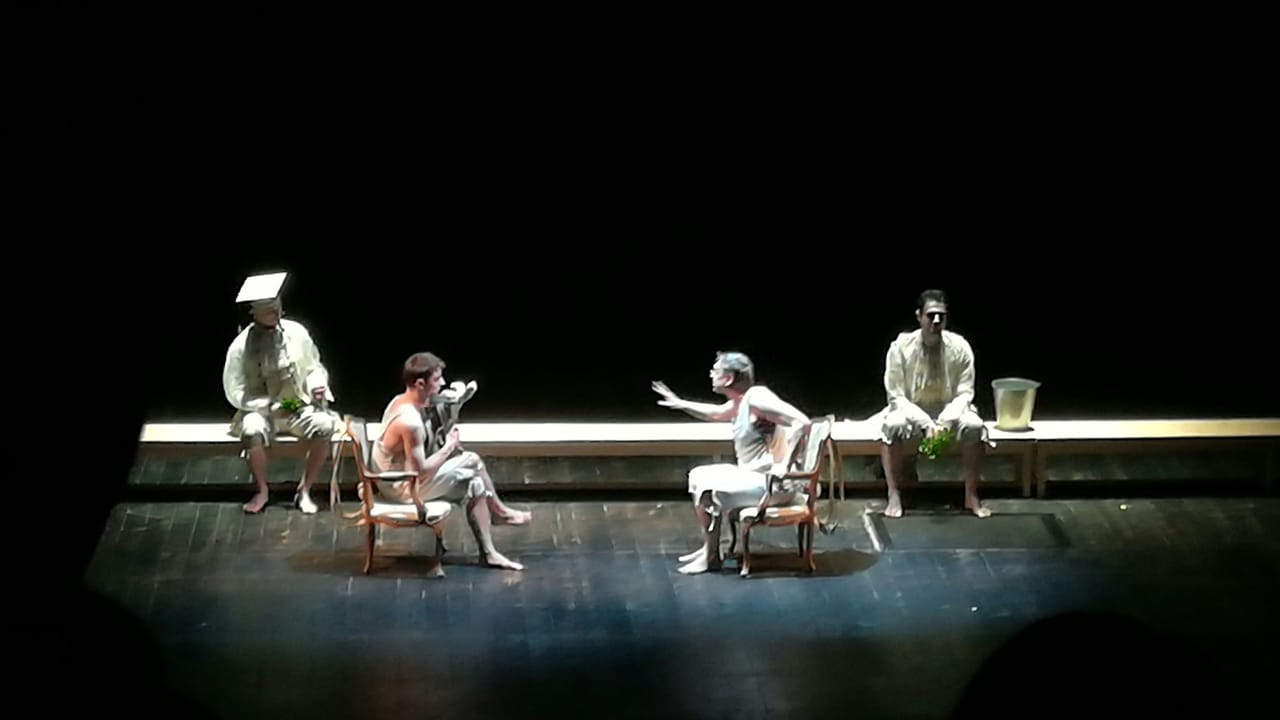
Watch a good musical and you never think about the loudspeakers. An actor turns downstage and sings a line quietly, and the voice seems to come from them, not from a box above the proscenium. For a long time that wasn't how it worked. Body mics and big amplification made a show loud enough for the back rows, and audiences accepted that the voice came from the PA, not the person.
That has changed. The aim in theatre sound design now is transparency: a system the audience doesn't notice, so they stay with the story. Designers such as Gareth Owen, Kai Harada, Nevin Steinberg, Jonathan Deans and Mikaal Sulaiman have shown it on Broadway, in the West End and in large touring shows. The goal isn't more level. It's a system that gets out of the way.
Theatre is not a rock show
As Gareth Owen points out, at a rock concert the sound is largely the responsibility of the person at the mixing desk. Theatre adds a script, a cast and dozens of open microphones:
- Many mics at once. In a typical musical, 30 to 40 cast members wear small omnidirectional wireless microphones hidden at the head.
- Comb filtering. When several open mics pick up the same voice at slightly different times, the signals cancel at some frequencies and reinforce at others, and the sound turns thin and muddy.
- Line-by-line mixing. To avoid it, the operator follows the script, bringing each mic up for its line and down again.
Layer an orchestra, sound effects and the room's own acoustics on top, and there is very little margin for error. Owen describes the benchmark like this: "The Holy Grail is when nobody talks about the sound—but rather about their experience on an emotional level."
How engineers placed the voice before
Making the audience believe a voice comes from the actor, not a loudspeaker stack, is called localisation. Before digital matrices and object-based processing, it took ingenuity and compromise:
- Left-centre-right zoning. Systems were split into fixed left, centre and right clusters, and engineers panned each vocal or instrument across them to roughly match where it stood on stage.
- The precedence effect. Your brain places a sound where its first arrival comes from, even when a later arrival is somewhat louder. Helmut Haas measured this for speech in 1949, which is why it's often called the Haas effect. Designers delayed outer and upper fills by roughly 10 to 30 milliseconds relative to the centre cluster, pulling the image back towards the stage.
- The operator's limit. With the front-of-house engineer already riding VCAs line by line for up to 40 body mics, following a moving actor by hand wasn't possible. Imaging stayed mostly fixed.
From fixed channels to moving positions
Modern sound design treats each source as a position on stage that can move, not a voice locked into a left, centre or right channel. The processor works out the level and delay from that position to every loudspeaker, so the operator places voices instead of calculating delay times.
The designers who changed the brief
This way of working came from designers who treat the sound system as part of the production, not a fixed piece of infrastructure:
- Gareth Owen used object-based distribution on productions such as Starlight Express and Cinderella in the West End, including stages and auditoriums that move.
- Kai Harada, known for his Tony-winning work on The Band's Visit and for Ragtime, blends orchestrations and dialogue into the drama in intimate and large houses alike.
- Nevin Steinberg, whose credits include Hamilton, Hadestown and Sweeney Todd, focuses on vocal intelligibility, so every lyric lands in every seat.
- Jonathan Deans, known for large spectacles including work with Cirque du Soleil, designs systems where sound moves through the space like a character.
- Mikaal Sulaiman, a Tony Award-winning artist, uses spatial audio somewhere between sound art and narrative realism to shape how audiences perceive a scene.
Excite the audience, not the auditorium
A system with wide, loose coverage sends energy onto plaster walls and the proscenium arch as well as into the seats, so the audience hears the room as much as the system. Directional loudspeakers and cardioid configurations, which cancel much of the sound behind the box, keep energy off the stage and on the audience.
The result is less spill onto the stage, feedback that is easier to control, and performers who are more comfortable.
Let the eyes and ears agree
If an actor speaks centre stage and the voice comes from a left-right PA, what the audience sees and what it hears disagree, and the illusion breaks. Spatial design takes the mix off the stereo buses and maps each voice to its position on stage. Whether it's a whisper or a line spoken to a puppet, the voice seems to come from the performer.
Where d&b Soundscape fits
We distribute d&b audiotechnik. Its Soundscape system is one way to bring these ideas into a theatre, and it is a set of tools rather than a loudspeaker layout:
- En-Scene places sources (cast members, instruments, effects) as objects on a map of the stage. As an actor moves, the voice moves with them across a distributed loudspeaker array, in real time.
- En-Space is room emulation. It adds reverberation modelled on measured acoustic spaces to dry or heavily treated theatres, without colouring the direct sound.
- The DS100 processor and En-Snap run the system and let engineers store, recall and automate spatial cues within the show.
On Cinderella in the West End, Gareth Owen combined Soundscape with a rotating auditorium. It shows the approach can cope with architecture that moves while the audience still doesn't hear the system. It is still design work, though: a careful loudspeaker layout, calibration and an operator who knows the show.
What it means for your venue
Audiences now expect clarity and intimacy at the same time, and visiting designers arrive expecting a house that can deliver both. Our team includes experienced touring engineers and lighting designers, so we design systems from the operator's side of the desk. We also support the rental companies and sound designers who bring shows in. For the South African premiere of Pretty Woman: The Musical in 2026, we supported them with the region's first d&b CCL system.
Whether you run a theatre, a concert hall or a live music venue, start with three questions:
- Where does the voice seem to come from in your best seat, and in your worst?
- How much of your system's energy lands on the walls and the stage rather than the seats?
- How often do the shows and the staging change, and who runs the system when they do?
The answers tell us whether retiming and redirecting what you already have is enough, or whether an object-based system is worth planning for a later phase. Tell us about your venue, and talk to a specialist about the options at your budget.