Stop buying for the Easter service
Most church AV is specified for the two busiest Sundays of the year. Design for the other fifty, and plan the big days separately. Your congregation, budget and volunteers will thank you.
When a church asks us to design a new system, the brief often starts with Easter. Or Christmas. Or the youth conference that fills the auditorium once a year. "It has to handle that," someone says, and they are right that it matters. Those services are where many people walk into your church for the first time.
But if the whole system is sized for those days, you pay for it on all the others.
What a peak-day system costs on an ordinary Sunday
A system specified for the biggest service of the year usually means more channels, more microphones, more screens and more lighting than an ordinary Sunday uses. That has three costs, and only one of them is money.
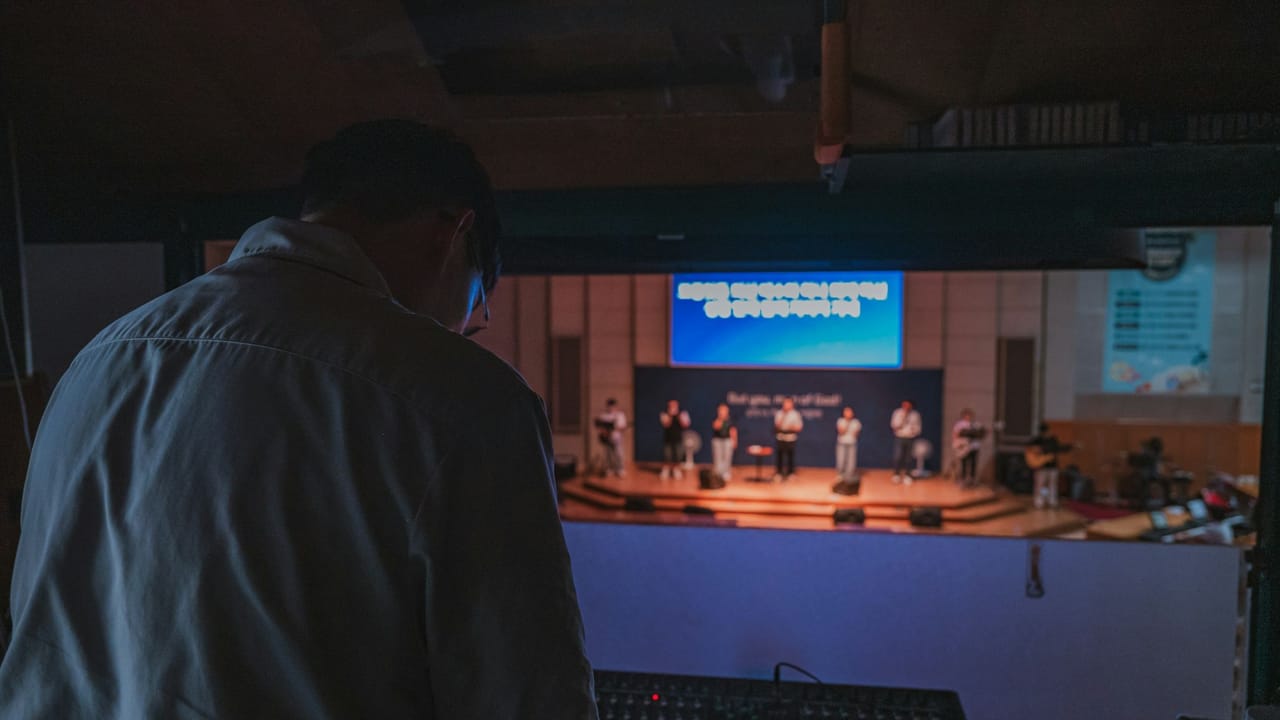
It's harder for volunteers to run. Every extra channel on the console, every extra scene in the lighting desk, is something a volunteer has to understand, or learn to leave alone. Your Sunday team is most likely people who were trained once and now serve every few weeks. A desk laid out for a 40-piece Easter production is a harder place to stand on a quiet Sunday morning than one laid out for the band you actually have.
It ages before it earns its keep. Equipment that comes out twice a year still ages every year. Firmware moves on, batteries wear out, and by the time it is used heavily, it may be due for replacement.
It takes the budget from the things you use every week. Money spent on capacity for two Sundays isn't spent on the things that every service depends on: coverage to every seat, clear speech, a stream that doesn't drop, and training for the team.
Design for the fifty Sundays
We'd rather start with an ordinary Sunday. How many people are in the room? Who's on stage? Who runs the desk, and how often? What does the stream need to carry?
Get that right and every week gets better. The pastor is heard in the back rows. The band can hear itself without turning up. The volunteer on the desk knows where everything is. This is also the system your leadership is really approving: the one the church will live with every week for the next ten years.
Then plan the big days, on purpose
The busy services still need to work. The difference is that you plan them as events, not as the baseline. There are three ways to do that, and most churches use a mix:
- Leave room to grow. Design the infrastructure (cable runs, network, power, rigging points and console inputs) for the big day, even if the equipment isn't. Running extra cable during an install costs far less than opening walls later.
- Hire in for the day. Extra wireless microphones, a bigger LED wall or more lighting can be hired for a weekend from a local rental company, along with crew who do this every week.
- Phase it. If the church is growing, plan the larger system in stages and add capacity once the ordinary Sunday needs it.
What we'd ask you
If you're planning an upgrade, these questions will tell you a lot about what you actually need:
- How many services a year fill the room, and how many are a normal Sunday?
- Who runs the system on a normal Sunday, and how much training have they had?
- What went wrong last Easter, and was it the equipment, or the people and the planning?
- Where will the church be in five years: more services, another campus, a larger room?
We'll help you answer them in a site assessment, and we'll give you options at more than one budget level, with what to install now and what to plan for later.
Easter matters. So does every Sunday after it.